Same Ocean, New Depths: The Clever Design Trick That Makes Every Spin Feel Like a First Dive
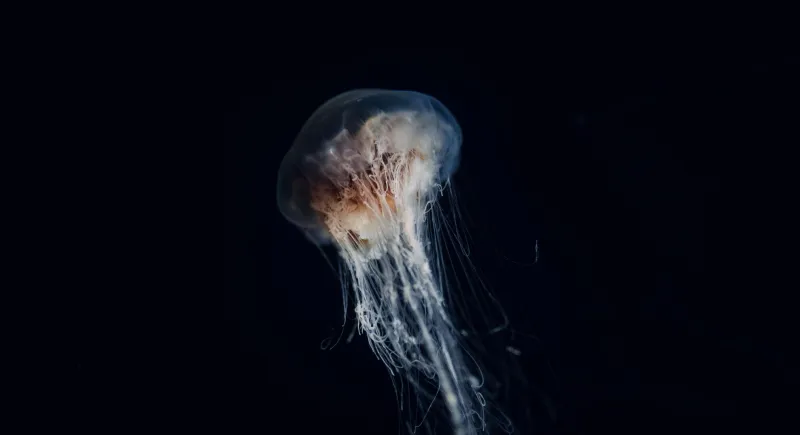
There's a moment most ocean spin players know well. You close the game at 1 a.m., fully convinced you've seen everything it has to offer. Then you're back the next evening, leaning forward, genuinely excited — as if the water itself rearranged overnight. Nothing changed. And yet everything feels new.
This isn't an accident. It's architecture.
The ocean-themed gaming space has quietly become one of the most sophisticated laboratories for player retention in all of digital entertainment. Beneath the shimmering surface of animated kelp forests and spinning reels lies a carefully engineered system designed to make finite spaces feel functionally infinite. Understanding how it works doesn't make you immune to it. If anything, it makes you respect it more.
The Illusion of the Undiscovered
Game designers talk about something called environmental storytelling — the practice of embedding narrative cues directly into the visual and spatial design of a game world rather than delivering them through cutscenes or dialogue. In ocean-themed spin games, this technique gets pushed to its creative limits.
"The ocean is the perfect canvas for this," says one indie game designer who has shipped three aquatic spin titles over the past five years. "It has natural layers — surface, midwater, deep benthic zones. Players intuitively understand that there's always something further down. We use that expectation as a design tool."
What that means in practice: visual elements shift based on session length, time of day, or cumulative play milestones. A reef backdrop that looked sun-drenched during your afternoon session takes on a bioluminescent glow at night. Creatures that lingered in the background during early gameplay drift closer as your account ages. The mechanical core stays consistent, but the scenery is in constant, subtle motion — giving your brain just enough novelty to register the experience as fresh.
Behavioral psychologist Dr. Mara Kessler, who consults for several digital gaming studios based out of Austin, Texas, describes this as "contextual reframing." The player isn't encountering new content in any meaningful sense, but the context surrounding familiar mechanics has shifted enough to trigger the same neural pathways associated with genuine discovery.
"Your brain doesn't always distinguish between real novelty and contextual novelty," she explains. "If the environment looks different, your reward circuitry treats it as different. That's not manipulation — that's just how perception works. Good designers understand this and build around it."
The Progression Ladder That Never Ends
Environmental storytelling alone wouldn't keep players coming back. The other half of the equation is incremental progression — and ocean-themed games have turned this into an art form.
Unlike traditional video games with defined endpoints, most spin-based ocean titles operate on what designers call asymptotic progression curves. You advance quickly at first — unlocking new zones, creature companions, or spin variants at a pace that feels rewarding and brisk. Then the intervals stretch. The next unlock is just a little further away. Then a little further still.
Critically, the destination always feels reachable. That's the key distinction between a game that hooks you and one that frustrates you into quitting. "We never want players to feel like they're grinding," says one lead developer at a mid-sized studio that specializes in aquatic gaming experiences. "We want them to feel like they're exploring. The difference is whether the player believes the next reward is just around the corner — or over the horizon."
In ocean-themed games, this translates beautifully. The metaphor of depth does a lot of heavy lifting. Telling a player they've "reached the thermocline layer" or "unlocked the abyssal zone" carries emotional weight that a generic level-up notification simply doesn't. Players aren't just progressing — they're descending, which feels like genuine discovery even when the mechanics underneath are largely the same.
Why Repetition Doesn't Feel Repetitive
Here's the paradox at the heart of all this: the games that keep players most engaged are often the ones with the most consistent core mechanics. Not the ones with the most content, the most variety, or the most frequent updates.
Dr. Kessler points to the concept of rhythmic reinforcement — the idea that humans find comfort and pleasure in repeated patterns, provided those patterns are occasionally interrupted by unexpected outcomes. "Think about waves," she says, leaning into the metaphor. "They're rhythmic, predictable, almost hypnotic. But every so often, a bigger one rolls through. That irregularity is what keeps you watching the water. You're not waiting for the average wave. You're waiting for the one that surprises you."
Ocean spin game designers have essentially codified this principle into their reward systems. The base spin cycle provides the rhythm. Bonus rounds, rare creature appearances, and environmental events provide the rogue wave. Strip either element out and the experience collapses — too predictable on one end, too chaotic on the other.
This balance is harder to strike than it sounds. Several high-profile aquatic spin titles have launched in the US market with too much visual complexity and too little mechanical consistency, resulting in player bases that burned bright and faded fast. The titles with staying power tend to be the ones where the core loop is almost meditative — familiar enough to feel safe, dynamic enough to feel alive.
The Designer's Dilemma
Not everyone in the industry is entirely comfortable with how effective these systems have become. Some designers wrestle openly with the ethical dimensions of building experiences specifically engineered to feel endlessly new.
"There's a version of this that's genuine craft," acknowledges one veteran designer who asked to remain anonymous. "You're creating something beautiful and layered that rewards sustained attention. And then there's a version where you're just running a really sophisticated loop on someone's dopamine system. The line between those two things isn't always obvious from the inside."
Dr. Kessler echoes the complexity. "Novelty-seeking is a core human drive. Satisfying it isn't inherently problematic. But when the simulation of discovery becomes a substitute for actual discovery — when players stop asking what's new and start just chasing the feeling of newness — that's worth examining."
For most players, that examination probably never happens consciously. You just know that the ocean keeps calling you back, that the next spin feels different from the last even when it isn't, and that there always seems to be something waiting a little further down.
Riding the Current Home
Maybe the most honest thing that can be said about ocean-themed spin games is that they work with human psychology rather than against it. The sense of infinite depth they create is an illusion, yes — but it's one built on a real truth: that we are wired to seek, to explore, and to find meaning in the familiar made strange.
The designers who understand this aren't just building games. They're building something closer to a tide — a force that pulls you in, carries you somewhere familiar, and somehow makes the return feel like arrival.
And if you find yourself diving back into the same waters tomorrow night, don't be too hard on yourself. The ocean's been doing this long before anyone figured out how to put it on a screen.