Beyond the Spin: The Craft Behind Ocean-Themed Games That Actually Keep You Coming Back
There's a reason you can sit down with a well-designed ocean spin game and suddenly realize two hours have slipped by like a rip current. It doesn't happen by accident. The studios crafting these experiences are thinking about a lot more than reels and paylines — they're thinking about you, your mood, your sense of wonder, and yes, your tendency to hit spin one more time just to see what's down there.
We pulled back the curtain on how the best ocean-themed spin games are built, and what we found is pretty fascinating.
The Aquatic Aesthetic Isn't Random
Let's start with the obvious question: why oceans? Game designers will tell you it's not just because undersea visuals look cool (though they do). The ocean occupies a specific psychological space for most players — it's vast, a little mysterious, and loaded with the promise of hidden things. That combination of awe and uncertainty is genuinely powerful as a design backdrop.
Behavioral researchers who study player engagement have noted that environments perceived as "explorable" — meaning they suggest depth and undiscovered content — naturally extend session length. Players aren't just reacting to what's on screen; they're subconsciously anticipating what might be there. Ocean settings tap into that instinct better than almost any other aesthetic. You're not staring at a flat surface — you're peering into something that seems to go on forever.
Design teams working on aquatic titles often spend considerable resources on layered backgrounds: foreground coral, mid-level fish movement, distant murky gradients that hint at something lurking deeper. That visual depth isn't just eye candy. It's a retention tool.
Sound Design: The Tide Beneath the Surface
If the visuals are the hook, the audio is what keeps you on the line. Sound design in ocean spin games is one of the most underappreciated crafts in the whole genre, and studios that get it right have a serious edge.
The most effective titles use what audio designers sometimes call "ambient layering" — a base layer of subtle water movement, a mid-layer of gentle marine life sounds, and reactive audio cues that respond to player actions. When you hit a winning combination, the swell of music doesn't feel jarring because it's already been built into the sonic environment around you. It feels like the ocean itself is rewarding you.
Psychologists who study immersive media point out that water sounds in particular have a measurable calming effect on the human nervous system. Lower stress means longer, more comfortable play sessions. It also means players associate the game with a kind of pleasant ease — which is exactly the emotional signature a designer wants attached to their title.
Some studios have even started using binaural audio techniques borrowed from meditation app developers, embedding subtle low-frequency tones that encourage relaxed focus. Whether or not players consciously register any of this, the cumulative effect on engagement is real.
Narrative Progression: You're Not Just Spinning, You're Exploring
One of the biggest shifts in ocean spin game design over the last few years is the move toward what designers call "narrative scaffolding" — essentially, giving players a reason to keep going that exists outside the mechanics themselves.
The old model was pretty simple: spin, win, spin again. The newer approach wraps those spins in a story. Maybe you're a deep-sea explorer uncovering a lost civilization one spin at a time. Maybe you're following a whale migration route across a map that unlocks new regions as you play. The spin is still the core action, but it's now the engine of something larger.
This matters for retention because it shifts the player's psychological framing. You're no longer just playing a game — you're progressing through a world. Incomplete narratives create what researchers call the "Zeigarnik effect," a well-documented tendency for people to think more about unfinished tasks than completed ones. Leave a story half-told, and players will come back to finish it.
Smarter studios are building these narrative layers with just enough breadcrumb-style reveals to keep curiosity alive without giving everything away upfront. Think of it like a good TV series — you don't binge it because of any single episode, you binge it because you need to know what's next.
The Role of Visual Reward Loops
Beyond narrative, the visual feedback loop in ocean spin games has gotten remarkably sophisticated. Early titles basically flashed some lights when you won. Today's titles deploy what designers call "cascade animations" — layered visual sequences that unfold in response to player outcomes, often featuring marine creatures reacting dynamically to the action on screen.
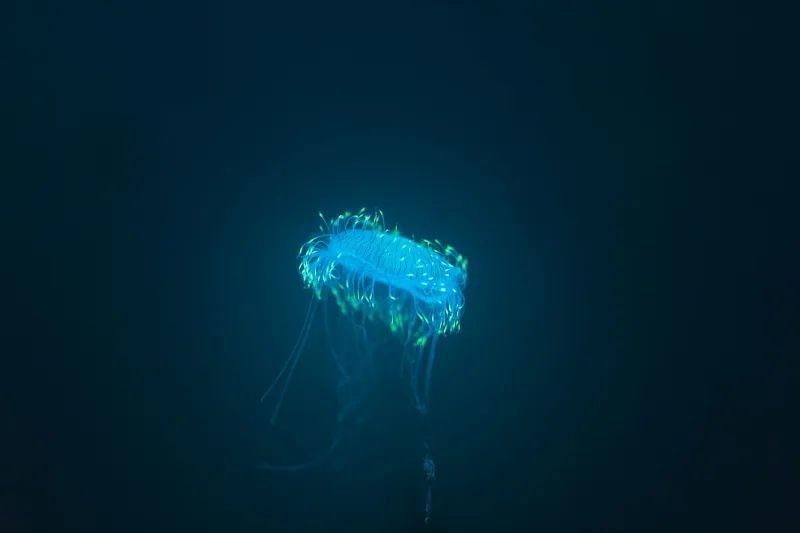
A school of fish scattering at the moment of a big win. A bioluminescent jellyfish pulsing with color during a bonus round. These aren't just decorative flourishes — they're timed to coincide with dopamine-triggering moments in the gameplay cycle, reinforcing the emotional high with a synchronized visual spectacle.
The key design principle here is that the reward has to feel earned and alive. Static imagery doesn't cut it anymore. Players — especially younger American audiences raised on high-production gaming — expect the world to respond to them. Ocean environments, with their naturally fluid and animated quality, are uniquely suited to delivering that sense of responsiveness.
Personalization: The Deepest Current
The frontier of ocean spin game design is personalization — and the studios thinking seriously about the next five years are already building systems that adapt to individual player behavior.
This goes beyond simple difficulty scaling. We're talking about games that notice whether you tend to play in short bursts or long sessions, whether you gravitate toward certain creature themes, whether you respond more to near-miss tension or to clean, satisfying wins. Over time, that data shapes how the game presents itself to you — which characters show up, which narrative threads get emphasized, even subtle shifts in the audio palette.
It's a level of craft that blurs the line between game design and personalized entertainment experience. And in a market as competitive as US mobile and desktop gaming, that kind of tailored engagement isn't a luxury — it's increasingly the standard players expect.
Why This All Matters
If you've ever wondered why certain ocean spin games feel genuinely different from the rest — more immersive, more satisfying, harder to put down — now you know it's not luck. It's craft. It's designers and psychologists and audio engineers working together to build something that respects your attention and rewards your time.
At OceanSpin 100, we think that craftsmanship deserves recognition. The best titles in this space aren't just games — they're engineered experiences, and the ocean is the perfect medium for building them. Deep, layered, full of surprises, and always pulling you a little further in.
Dive in. The current's warm.