Riding the Wave: How Ocean Spin Gaming Tournaments Are Minting the Next Wave of American Esports Pros
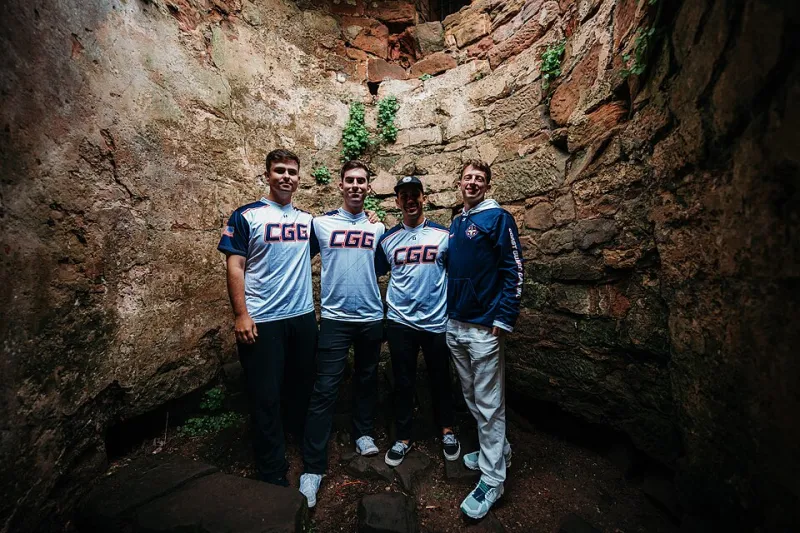
Photo: U.S. Coast Guard USCGRC by Petty Officer 2nd Class Jasmine Mieszala, Public domain, via Wikimedia Commons
Not long ago, the idea of watching someone compete in an ocean-themed spin game for a five-figure prize would have sounded like a fever dream. Fast forward to today, and packed online brackets, live-streamed finals, and increasingly serious prize pools are turning that dream into a very real competitive circuit. The tides have shifted — and American gaming culture is riding them hard.
From Living Rooms to Leaderboards
The competitive side of ocean spin gaming didn't materialize overnight. It grew organically out of communities of players who were already obsessed with chasing rare aquatic rewards, perfecting timing mechanics, and comparing scores in Discord servers. What started as friendly rivalry in niche forums gradually evolved into organized bracket events hosted on platforms like Twitch and YouTube Live.
By early 2023, regional online tournaments were drawing hundreds of registered participants across the US. Fast forward to now, and some of the larger events are pulling in thousands of entrants with prize pools that have reportedly climbed past the $50,000 mark for flagship competitions. That's not pocket change — and it's getting the attention of people who know a growth market when they see one.
"I used to just play for fun, trying to unlock the legendary kraken bonus rounds," says Marcus T., a 24-year-old from Austin, Texas, who now competes semi-professionally in ocean spin tournaments. "Then someone told me about a bracket event with a $5,000 top prize, and I thought — why not? I placed third my first time out. That kind of hooked me on the competitive side."
What Makes These Competitions Different
So what separates an ocean spin tournament from, say, a traditional fighting game bracket or a battle royale championship? A lot, actually.
For starters, ocean spin games blend elements of strategy, timing, and pattern recognition in ways that reward consistent players without completely eliminating the unpredictable variance that makes every session feel fresh. Competitors aren't just mashing buttons — they're reading spin sequences, managing in-game resources, and making split-second decisions about when to activate bonus mechanics like depth dives, current multipliers, or storm surge features.
The aquatic theming also plays a psychological role. There's something about the visual language of the ocean — the rhythm of the waves, the layered depth of the environments — that creates a distinct atmosphere in competitive play. Viewers describe watching high-level ocean spin matches as almost meditative, even when the stakes are sky-high.
"It's not like watching an FPS where everything is chaos," explains Sarah L., a competitive commentator based in Miami who covers ocean spin events for several streaming channels. "There's this tension that builds, like watching a deep-sea creature approach the surface. When a top player hits a legendary spin sequence, the crowd goes absolutely wild. It has its own rhythm."
Traditional Esports Organizations Are Wading In
Perhaps the clearest signal that ocean spin gaming has arrived as a legitimate competitive category is the growing interest from established esports organizations. Several mid-tier orgs with existing rosters in other titles have begun quietly scouting ocean spin talent, offering sponsorship deals and coaching infrastructure to standout players.
Industry insiders suggest that at least three well-known North American esports brands are currently in discussions to formally sponsor ocean spin tournament series before the end of the year. While nothing has been officially announced, the chatter is loud enough that veteran esports journalists are paying attention.
For players like Devon R., a 21-year-old from Chicago who went from casual player to top-ten ranked competitor in under eighteen months, the organizational interest feels validating. "People used to laugh when I said I was training for ocean spin tournaments," he says. "Now those same people are asking me how to get into it. The scene is real."
Prize Pools, Sponsorships, and the Money Behind the Movement
Let's talk numbers. Prize pool growth in ocean spin gaming competitions has outpaced many comparable niche esports categories over the past two years. Community-funded events have seen total prize distributions climb steadily, with top-tier individual tournaments now regularly offering $10,000 to $25,000 in combined prizes. When you factor in platform sponsorships, equipment deals, and streaming revenue for top competitors, the financial picture becomes genuinely compelling.
Brands outside of gaming are also starting to notice. Energy drink companies, peripheral manufacturers, and even lifestyle brands with coastal aesthetics have begun exploring partnership opportunities with high-profile ocean spin events — a classic sign that a competitive scene is crossing from niche to mainstream awareness.
Where the Current Is Taking Us
Predicting the future of any esports niche is tricky, but the indicators for ocean spin gaming are hard to ignore. The player base is young, the content is highly streamable, and the competitive format is accessible enough that new players can get involved without years of grinding mechanical skill.
Industry analysts who track emerging esports categories have flagged ocean spin tournaments as one of the fastest-growing competitive niches in the US market. If current trajectory holds, it's not unreasonable to expect a flagship national championship event — potentially with six-figure prize pools — within the next two to three years.
For Marcus, Sarah, Devon, and the thousands of other players who found their competitive spark through the spin of an ocean-themed reel or the crash of a digital wave, that future can't arrive fast enough.
"This is just the beginning," Marcus says with a grin. "The deep end is a lot bigger than people realize."