Hooked by the Deep: The Science Behind Why Ocean Spin Games Are Impossible to Quit
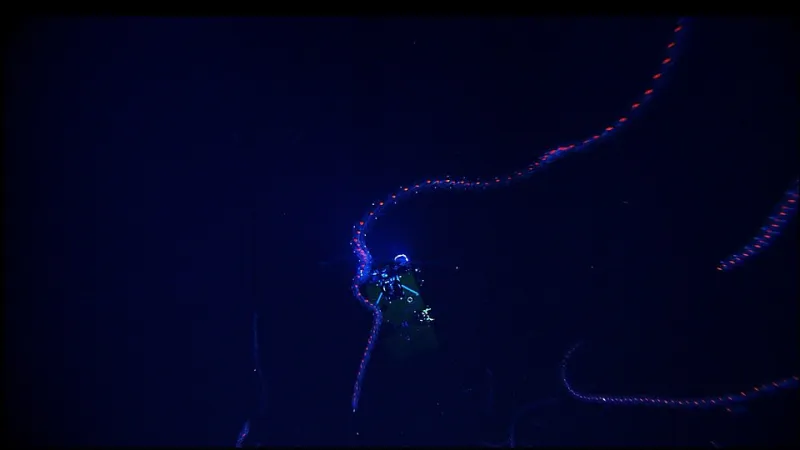
Photo: IFE, URI-IAO, UW, Lost City Science Party; NOAA/OAR/OER; The Lost City 2005 Expedition., Public domain, via Wikimedia Commons
You know the feeling. You sit down for a quick session, the familiar sound of water rushing through your speakers kicks in, the reels start moving, and suddenly it's 45 minutes later and you're still riding the current. Ocean spin games have a reputation for being uniquely hard to put down — and it turns out, that's not an accident.
There's a whole cocktail of neurological and behavioral mechanics working behind the scenes every time you hit that spin button. And when you layer the sensory richness of an aquatic environment on top of those mechanics? Well, you get something that feels less like a game and more like a current you can't quite swim out of.
Your Brain on the Spin
Let's start with the basics. Every time you trigger a spin, your brain releases a small hit of dopamine — the same neurotransmitter tied to anticipation, reward, and motivation. But here's the thing: it's not the winning that causes the biggest spike. It's the almost winning. Behavioral psychologists call this the near-miss effect, and it's one of the most powerful engagement tools in game design.
When the reels slow down and two matching ocean symbols line up — say, a glowing jellyfish and a treasure chest — and that third symbol just barely misses, your brain registers that near-miss almost like a win. The dopamine still flows. The anticipation resets. And you're already reaching for the spin button again.
This variable reward schedule — the unpredictable pattern of wins, near-misses, and dry runs — is the same psychological engine that makes slot machines compelling and keeps people scrolling social media feeds. But ocean spin games, according to behavioral researchers who study interactive entertainment, seem to amplify this effect through something else entirely: the environment itself.
Why the Ocean Hits Different
Aquatic environments have a measurable effect on human psychology. Studies in environmental psychology (a field that examines how physical spaces affect mood and cognition) have consistently shown that blue spaces — oceans, rivers, lakes — tend to reduce stress, lower cortisol levels, and put people into a state of relaxed alertness. Some researchers have called this state "blue mind."
Now think about what that means for a spinning game. When you're relaxed but alert, you're more open to continued engagement. Your guard is down. You're not anxious or overstimulated — you're comfortable. And comfortable people don't want to get up and leave.
Ocean spin game designers, whether intentionally or intuitively, have tapped into this. The ambient sound design in these games — soft wave loops, distant whale calls, the gentle bubbling of an underwater current — isn't just aesthetic. It's functional. It creates an emotional state that makes players more receptive to staying in the experience longer.
Add in the visual language of the deep: bioluminescent creatures that glow when you hit a bonus round, schools of fish that scatter across the screen on a big win, coral reefs that seem to bloom and pulse with color during free spins. These aren't just pretty graphics. They're sensory cues that your brain associates with discovery and reward — primal stuff, rooted in how humans evolved to respond to rich, resource-filled environments.
The Designer's Perspective
Game designers who work in the ocean spin space talk a lot about what they call "immersive tension" — the balance between a player feeling safe enough to stay and curious enough to keep going. The ocean metaphor does a lot of heavy lifting here.
The sea is simultaneously familiar and mysterious. Most Americans have been to a beach, watched ocean documentaries, or grown up with ocean-themed movies and games. There's cultural comfort there. But the deep ocean is also genuinely unknown — it carries a sense of hidden treasure, unexplored territory, and the possibility that something extraordinary is just beneath the surface.
That duality maps perfectly onto spinning mechanics. Every spin is familiar — you know how it works, you know the rules — but the outcome is always unknown. You're always diving a little deeper. The ocean theme doesn't just decorate that mechanic; it reinforces it on a narrative level.
The 'Just One More' Loop
So how does all of this translate into that signature "just one more spin" mentality that ocean spin players know so well?
It's a loop. The calming aquatic environment lowers your resistance to continued play. The variable reward schedule keeps your dopamine system engaged and anticipatory. The near-miss effect tricks your brain into treating losses as almost-wins. The rich visual and audio feedback of ocean-themed animations makes wins feel genuinely spectacular. And the narrative framing — you're exploring, you're discovering, you're diving deeper — gives the whole experience a sense of forward momentum.
Each spin isn't just a spin. It's the next stroke in a swim toward something just out of reach.
Behavioral researchers who study gaming habits note that this combination of environmental calm and reward unpredictability is particularly potent because it sidesteps the anxiety that can make other high-stimulation games feel exhausting. You're not fighting anything. You're flowing. And flowing feels good enough to keep doing.
Riding Responsibly
Understanding the mechanics behind that pull doesn't make it less real — but it does give you a little more control over the current. Setting time limits before you start a session, taking breaks between spin runs, and paying attention to how you feel during play are all ways to stay in the fun zone without getting swept out to sea.
The best ocean spin experiences are designed to be enjoyable, not overwhelming. And when you know what's happening under the hood, you can appreciate the craft of it while still keeping your fins firmly planted.
The deep is always calling. Now you know why — and that's half the battle.