Deep Dark Sessions: What Happens to Your Body When Ocean Spin Owns Your Nights
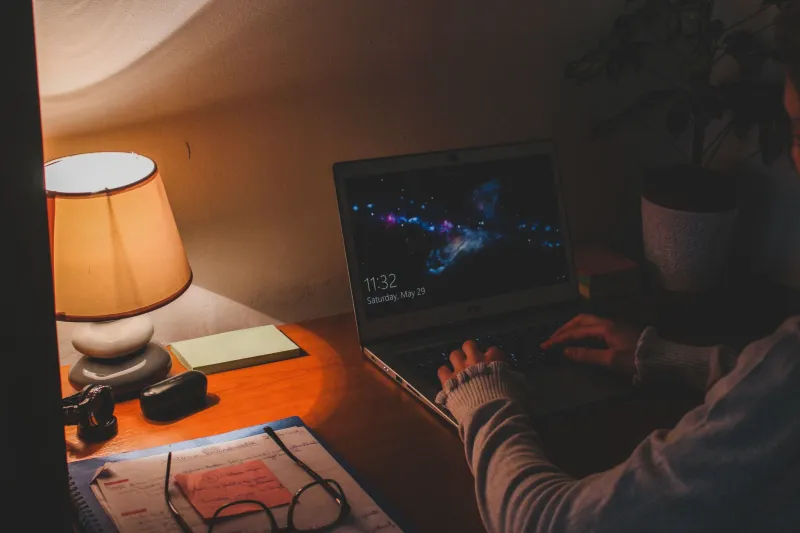
Something strange happens around 11:47 PM in households across America. The lights go down, the family goes quiet, and a particular kind of gamer settles in — not to wind down, but to wake up. The ocean is calling, and it doesn't care what time it is.
Late-night Ocean Spin sessions have become a full-blown subculture, and if you're part of it, you already know the feeling. The house is still, the screen glows blue-green, and the reels are spinning in perfect, hypnotic rhythm. What you might not know is what all of that is quietly doing to your body.
Why Night Feels Like the Right Time to Dive
Ask ten late-night Ocean Spin players why they prefer the after-midnight hours, and you'll get ten versions of the same answer: it just hits differently. Less noise, fewer distractions, a sense that the game belongs entirely to you.
But there's more going on than atmosphere. Dr. Renee Calloway, a sleep researcher at a mid-Atlantic university who studies screen-based behavioral patterns, explains that the quieter nighttime environment removes what she calls "competing stimuli." Your brain, she says, is more susceptible to immersive feedback loops when external distractions are stripped away. Ocean-themed games, with their layered ambient soundscapes — whale calls, crashing surf, deep-water pressure hums — fill that sensory vacuum in a way that daytime sessions simply can't replicate.
"The aquatic audio design in these games is doing something really specific," Calloway told us. "Low-frequency sound mimics environments associated with safety and enclosure. Your nervous system reads it as calming even while the visual stimulation from spinning mechanics is keeping your brain alert. It's a physiological contradiction, and your body doesn't know how to resolve it quickly."
That contradiction, it turns out, is part of the trap.
The Blue-Green Light Problem Nobody Talks About
Most gamers have heard the warnings about blue light from screens. But Ocean Spin games add a layer to that conversation that rarely gets discussed. The color palettes in aquatic-themed games — heavy on cyan, teal, deep navy, and bioluminescent green — sit in a specific range of the light spectrum that research suggests is particularly effective at suppressing melatonin production.
Melatonin is the hormone your brain releases to signal that sleep is approaching. Suppress it long enough and your internal clock starts drifting, sometimes by hours. Do it consistently across weeks or months, and you've effectively reprogrammed your circadian rhythm.
Dr. Marcus Webb, a chronobiologist based in Chicago who has consulted with gaming companies on user experience design, puts it plainly: "Ocean-themed games are unintentionally optimized for nighttime play in ways that other genres aren't. A dungeon crawler uses dark tones. A racing game uses warm reds and oranges. Aquatic games use exactly the hues that tell your brain it's still daytime. Players aren't just choosing to stay up — their biology is being nudged in that direction."
The Spin Itself: Why Rotation Mechanics Are Uniquely Addictive After Dark
Beyond color and sound, the mechanical loop of spinning itself plays a role. Spinning mechanics in games create what behavioral psychologists call a "variable reward schedule" — you don't know exactly when the payoff is coming, which keeps dopamine release unpredictable and therefore more potent. At night, when your prefrontal cortex (the part of your brain responsible for rational decision-making) is already fatigued from a full day, your resistance to these reward loops drops significantly.
In simpler terms: the spin is always compelling, but it's especially compelling at midnight when your brain's brakes are worn down.
Players in online Ocean Spin communities have noticed this without necessarily having the scientific vocabulary for it. Forum posts frequently describe "getting locked in" during late sessions in ways that don't happen during afternoon play. One user from a major Ocean Spin Discord server described it as "the current pulling harder after dark." That's not just poetic — it's neurologically accurate.
What Chronic Sleep Disruption Actually Does
Here's where the conversation gets serious. The occasional late-night session isn't going to wreck your health. But a pattern of regularly pushing sleep past 1 or 2 AM — which surveys of gaming communities suggest is common among dedicated Ocean Spin players — carries real physiological costs.
Short-term, you're looking at impaired reaction time, reduced emotional regulation, and compromised memory consolidation (which, ironically, hurts your gaming performance). Medium-term, chronic sleep disruption is linked to increased cortisol levels, which affects everything from immune function to weight management. Long-term, the research gets darker: persistent circadian disruption has been associated with elevated risks for cardiovascular issues, metabolic disorders, and mood disturbances.
None of that is unique to Ocean Spin gaming — it applies to any habitual late-night screen use. But the specific combination of factors in aquatic spinning games may make the habit stickier and harder to break than other genres.
Practical Strategies for Staying in the Game Without Wrecking Your Sleep
The goal here isn't to tell you to log off and go to bed. That's not the OceanSpin 100 way. The goal is to help you ride the current smarter.
Set a hard anchor time. Decide before you sit down what time you're closing the session, and use an external alarm — not a mental promise. Mental promises don't survive the 1 AM dopamine loop.
Use blue-light filtering software. Apps like f.lux or your device's built-in night mode won't eliminate the problem, but they reduce the melatonin suppression effect meaningfully. Turn them on at least 90 minutes before your intended sleep time.
Decompress before you disconnect. Going straight from a high-intensity spin session to your pillow is a recipe for lying awake staring at the ceiling. Give yourself 20 minutes of low-stimulation activity — reading, stretching, anything that isn't a screen — to let your nervous system downshift.
Protect your weekend anchor. Sleep researchers consistently recommend keeping your wake time consistent even on days off. It's the single most effective way to stabilize a drifting circadian rhythm. Yes, even if you were spinning until 2 AM on Saturday.
Consider morning sessions strategically. Some top-tier Ocean Spin players have flipped their habits entirely, scheduling serious sessions for early morning when the house is equally quiet but the biological clock is working with them instead of against them.
The Current Will Always Be There
There's something genuinely beautiful about the late-night Ocean Spin experience. The stillness, the glow, the feeling that you've found a private pocket of the ocean that belongs only to you. That pull is real, and it makes sense that so many players chase it.
But the ocean doesn't care if you're tired. The reels will spin at 3 AM just as readily as they spin at 3 PM. The question is whether you're the one steering the current or whether the current is steering you.
Ride smart, and the deep will always be there waiting.