Deeper Than the Game: The Unexpected Friendships Forming Inside Ocean Spin Communities
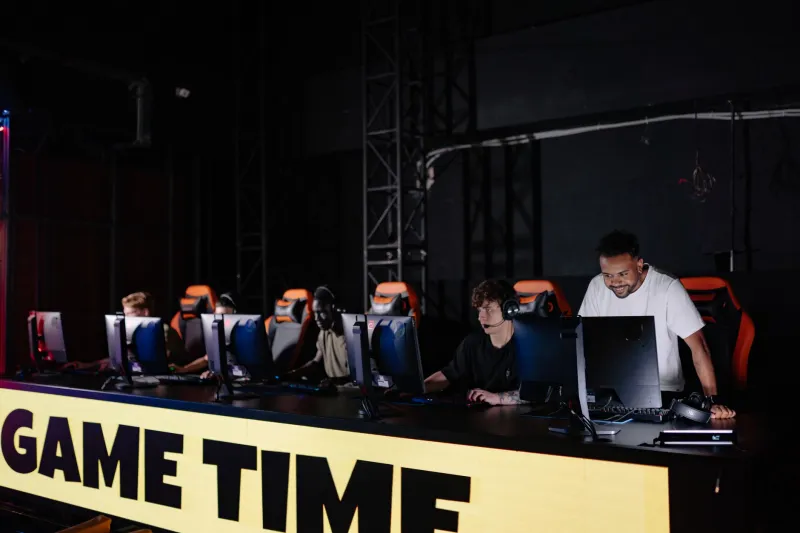
When Marcus T. from Austin, Texas first logged into an Ocean Spin gaming server back in 2022, he was looking for tips on maximizing his bonus rounds. What he found instead was a group of strangers who'd become his closest friends. "I wasn't expecting anything social," he admits. "I just wanted to get better at the game. But now these people know more about my life than some of my coworkers do."
Marcus's story isn't unusual. Across Discord servers, Twitch streams, and dedicated guild channels, Ocean Spin gaming communities are quietly becoming one of the more surprising social engines in American gaming culture. The friendships forming here aren't shallow or transactional — they're the kind built over time, through shared frustration, shared wins, and a whole lot of late-night conversation.
More Than Just a Leaderboard
It's easy to assume that gaming communities organize themselves almost entirely around competition. Rankings, win rates, optimal strategies — those things matter, sure. But spend any real time inside an active Ocean Spin guild or community server, and you'll notice something different happening in the quieter channels.
There are channels dedicated to pet photos. Threads where players share what's going on in their personal lives. Voice chats that start as strategy sessions and drift into two-hour conversations about movies, relationships, and career stress. The game is often just the opening act.
"The spin mechanics give us something to talk about, something to share in the moment," says Priya L., a community moderator based in Chicago. "But the reason people stick around? That's the people. The game gets you in the door. The community makes you want to stay."
This pattern — game as catalyst, community as anchor — shows up consistently across Ocean Spin spaces. Players will openly tell you that they've played other games, joined other servers, and never felt the same pull to return. Something about this particular corner of gaming seems to generate stickiness that goes beyond the mechanics themselves.
What Makes the Aquatic Theme Work Socially
This might sound like a stretch, but the ocean theme genuinely seems to matter here. Gaming researchers and community builders have noted for years that a game's aesthetic and metaphorical framework shapes the culture of its player base in subtle ways. Ocean Spin's aquatic identity — the idea of currents, tides, diving deep, riding waves — translates into a community culture that tends to feel more fluid and less rigid than some competitive gaming spaces.
"There's no 'alpha' energy in the ocean theme," laughs Darnell W., a longtime player from Atlanta who now runs a mid-sized Ocean Spin Discord with over 800 members. "It's more like — we're all just swimming together. Nobody owns the water."
That metaphor carries real weight in how these communities self-organize. New players aren't treated as outsiders to be hazed or ignored — they're welcomed in, shown around, introduced to the regulars. Veterans share knowledge freely. The competitive edge that can make some gaming communities feel cold and exclusionary is present but softened, balanced by a collective vibe that genuinely seems to prioritize enjoyment over dominance.
Guilds as Found Families
If Discord servers are the neighborhoods, guilds are the households. Ocean Spin guilds tend to be smaller, tighter groups — anywhere from a dozen to a few dozen players — who coordinate regularly, share resources, and develop the kind of familiarity that comes from spending real time together.
Several players we spoke with used the phrase "found family" without any prompting. It's a term that's migrated from fan fiction culture into mainstream gaming vernacular, and it fits here in a way that feels earned rather than clichéd.
Tamara F. from Portland describes how her guild got her through a genuinely difficult period. "I was going through a rough breakup, kind of isolating myself. These people noticed. They started checking in. One of them sent me a care package through Amazon — we'd never met in person. That's not something you expect from a gaming group."
These micro-communities often develop their own inside jokes, traditions, and rituals. Milestone celebrations when a member hits a major achievement. "First spin of the day" check-ins where players post their morning results like a shared ritual. Memorial posts when a member goes through a loss. The scaffolding looks like a game community, but the emotional texture is something closer to a support network.
Streaming as a Social Bridge
Live streaming has added another layer to how Ocean Spin communities form and sustain themselves. When a streamer builds a consistent audience around Ocean Spin content, they're not just broadcasting gameplay — they're hosting a recurring social gathering. Regular viewers develop relationships not just with the streamer but with each other, recognizing familiar names in the chat, building rapport across sessions.
"My chat has its own culture at this point," says a streamer who goes by CoralDrift and broadcasts to roughly 3,000 regular viewers. "There are people who met in my stream and now talk every day outside of it. I feel like a matchmaker sometimes. But for friendships, not romance — well, mostly."
The parasocial element that often gets criticized in streaming culture takes on a different quality in tightly-knit gaming communities. Because many Ocean Spin streamers are accessible, interactive, and part of the same community ecosystem rather than distant celebrities, the connections feel more lateral than hierarchical. Viewers aren't worshipping from afar — they're participating in something.
Why This Matters Beyond the Game
Loneliness in America is a documented crisis. The U.S. Surgeon General issued an advisory on the epidemic of loneliness back in 2023, and the data has only grown more sobering since. For a lot of people — especially adults in their 20s and 30s who've aged out of the built-in social structures of school — finding genuine community is genuinely hard.
Ocean Spin gaming communities aren't solving that crisis. But they're doing something real. They're giving people a reason to show up somewhere regularly, a shared language, a group of people who notice when you're absent and celebrate when you return.
"I moved to a new city two years ago and didn't know anyone," says Kevin R. from Denver. "My Ocean Spin guild was the first group of people I actually felt like myself around. Some of them I've now met in person. It started with a game, but it became something way more than that."
The spins keep spinning. The tides keep turning. But underneath all the gameplay and the mechanics and the strategy, something quieter and more lasting is building in these virtual waters — and it looks a lot like belonging.