When the Waves Hit Back: The Surprising Rise of Motion Sickness in Ocean Spin Gaming
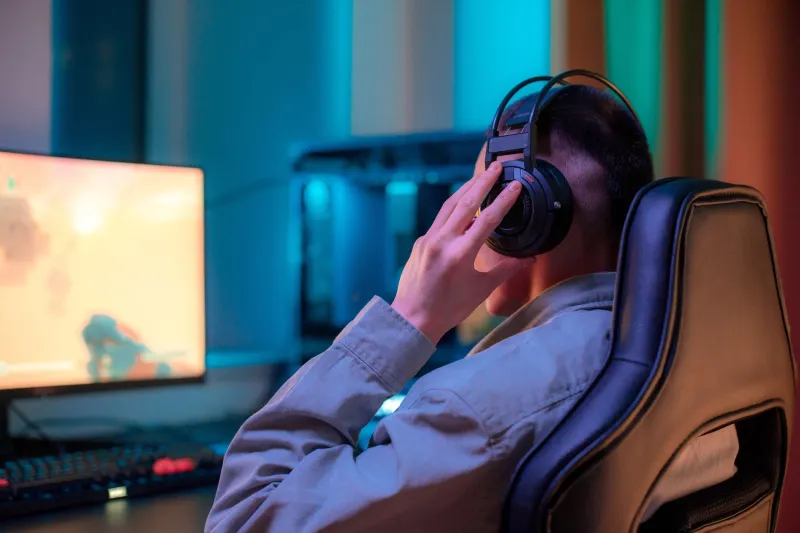
For most players, booting up an ocean spin game is pure escapism — the kind of blue-lit, swirling digital seascape that makes a Tuesday night feel like a dive vacation. But for a quietly growing slice of the gaming community, that same experience ends with a hand pressed to the forehead and a slow walk to the bathroom.
Motion sickness in gaming isn't new. First-person shooters have been triggering it for decades. But something specific is happening in the ocean-themed spin space, and players are starting to talk about it more openly. Forum threads, Discord servers, and Reddit communities dedicated to aquatic gaming titles have seen a noticeable uptick in posts from players describing dizziness, nausea, and disorientation — sometimes after sessions as short as fifteen minutes.
So what exactly is going on beneath the surface?
Your Brain Is Getting Played
The short answer is that your nervous system is being tricked, and it doesn't appreciate the joke.
Motion sickness — whether you're on a fishing boat or staring at a spinning reel animation — comes down to a conflict between what your eyes are telling your brain and what your body is actually experiencing. The technical term is "sensory mismatch," and it sits squarely in the domain of your vestibular system, the inner-ear apparatus responsible for balance and spatial orientation.
When you watch a tightly looping spin animation against a rolling ocean backdrop, your visual cortex is processing motion. Your inner ear, meanwhile, is registering that you're sitting completely still in a gaming chair. That contradiction triggers a distress response that, evolutionarily speaking, your brain associates with one thing: you've eaten something poisonous and need to expel it immediately.
Nice. Very helpful, evolution.
The ocean-themed spin genre compounds this problem in a few specific ways. Unlike a standard slot-style interface with a flat, neutral background, many of these titles layer multiple moving elements simultaneously — spinning reels, animated water surfaces, parallax scrolling coral, bubbles drifting upward, and fish darting across the screen. Each of those elements moves at a slightly different speed and in a different direction. For players with any degree of vestibular sensitivity, that visual complexity is essentially a full sensory assault.
"I Had to Lie Down for Two Hours"
Players who experience this aren't being dramatic. We spoke with several members of the OceanSpin community who described their symptoms in pretty vivid terms.
Marco, a 34-year-old from Phoenix who's been playing ocean spin titles for about three years, said his issues started gradually. "At first I thought I was just tired. Then I realized it was always happening after certain games — the ones with the really heavy water animation. I'd close the app and the room would still feel like it was moving."
That lingering sensation — where the spinning or rocking feeling persists after the screen goes dark — is called the "mal de débarquement" effect, loosely translated from French as "sickness of disembarkation." It's the same thing sailors experience when they step off a boat after a long voyage and still feel the ocean moving under them. Gamers are increasingly reporting it after extended ocean spin sessions.
Jenna, a 28-year-old from outside Nashville, said she had to give up one of her favorite games entirely. "It was devastating, honestly. I loved the aesthetic, I loved the community around it. But after about twenty minutes I'd get this horrible pressure behind my eyes and I'd feel nauseous for the rest of the night. I tried everything — sitting farther back, turning down the brightness. Nothing worked."
For players like Jenna, accessibility isn't an abstract design principle. It's the difference between being part of a community and being locked out of it.
The Design Decisions That Make It Worse
Developers, for their part, are beginning to reckon with the fact that visual ambition and player comfort don't always swim in the same direction.
Several design patterns appear repeatedly in titles that generate the most complaints. Continuous background motion — particularly looping wave animations that never fully settle — keeps the visual system in a state of perpetual processing. Spin animations that accelerate and decelerate with exaggerated easing curves (the kind of physics-mimicking motion meant to feel satisfying) can be particularly disorienting for sensitive players. And the use of fish-eye lens distortion effects, popular in games aiming for an "underwater" perspective, introduces peripheral warping that the visual system struggles to reconcile.
One indie developer, who asked to remain anonymous because they weren't authorized to speak publicly about their studio's accessibility roadmap, was candid about the industry's blind spot. "Honestly, most of us test our games with people who are already gamers, already habituated to screen motion. We're not a representative sample. Someone who has even mild vestibular sensitivity never makes it into a standard playtest."
That testing gap has real consequences. Features that feel polished and immersive to a seasoned playtester can be genuinely nauseating to a first-time player — or to someone who happens to be more sensitive that day due to fatigue, caffeine, or even a mild cold.
What Can Actually Help
The good news is that solutions exist, and they're not particularly complicated to implement — they just require developers to prioritize them.
The most effective tool is a robust set of motion reduction options. This means giving players the ability to independently reduce or disable background animation, slow down spin sequences, and turn off particle effects like bubbles and floating debris. Games that offer a "static mode" — where the background becomes a still image rather than a moving scene — have received notably positive feedback from sensitive players without meaningfully diminishing the experience for everyone else.
Field of view adjustments, more commonly associated with first-person games, can also help in titles that use any kind of perspective distortion. And something as simple as adding a brief "settling" pause at the end of each spin — rather than immediately looping back into motion — gives the visual system a chance to recalibrate.
For players managing symptoms on their own, a few practical strategies make a real difference. Reducing screen brightness, increasing ambient room lighting, and taking deliberate breaks every fifteen to twenty minutes can significantly reduce the cumulative sensory load. Some players swear by ginger chews or acupressure wristbands — the same tools used for sea travel — with mixed but occasionally convincing results.
The Bigger Picture
What's happening with motion sickness in ocean spin gaming is, in a way, a symptom of the genre's own success. These games have gotten genuinely more immersive, more visually sophisticated, and more ambitious in their use of aquatic atmosphere. That's largely a great thing. But ambition without accessibility leaves real players behind.
The ocean is supposed to be the invitation — the sense of depth and wonder that pulls you in. When the waves start pushing people back out, something's gone wrong with the design equation.
The studios getting this right are the ones treating motion sensitivity not as an edge case, but as a core part of what it means to build a game that anyone can actually enjoy. Because at the end of the day, the best spin in the world doesn't mean much if the player is too dizzy to ride it.