When the Ocean Teaches the Algorithm: How Real Currents Are Reshaping Spin Game Design
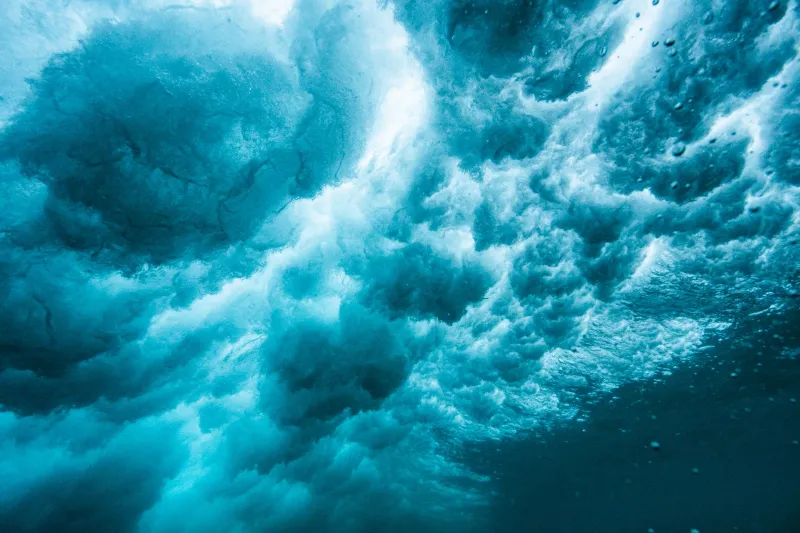
There's a moment most Ocean Spin players know well. You hit that spin button, the reels start moving, and something feels different — not random, not chaotic, but almost... alive. Like the game is breathing. Turns out, for a growing number of developers, that feeling isn't an accident. It's oceanography.
A quiet but genuinely fascinating collaboration has been forming between marine scientists and game engineers over the past few years. The result? Spin mechanics that don't just look like the ocean — they behave like it.
The Blueprint Beneath the Surface
For decades, game randomness has leaned heavily on standard probability models. Roll the dice, pull the lever, spin the wheel — all rooted in clean mathematics that the average player can't see but vaguely senses. It works. But it's also flat. Predictable in its unpredictability, if that makes sense.
What oceanographers brought to the table was something different: the idea that natural systems don't just randomize. They cycle. They build pressure, release it, redirect, and reset — all according to physical laws that have been governing Earth's water for billions of years.
"Rip currents are a perfect example," says Dr. Mara Hollins, a physical oceanographer based out of Scripps Institution of Oceanography in La Jolla, California, who has consulted informally with two indie game studios over the past eighteen months. "A rip current isn't random. It's the result of wave energy accumulating along a shoreline until it has to go somewhere. There's a buildup, a release, and a dissipation. That's a narrative arc. Game designers love that."
And she's right. When you translate that arc into a spin mechanic, you get something that feels earned rather than arbitrary. A streak of near-misses that builds tension. A sudden release that rewards patience. A cooldown that resets the cycle. Players don't need a degree in fluid dynamics to feel the difference — they just know the game feels right.
Gyres, Loops, and the Psychology of Momentum
Beyond rip currents, ocean gyres — those massive, slow-spinning circular current systems that dominate the Pacific and Atlantic — have become a conceptual model for what some developers are calling "momentum mechanics."
Traditional spin games treat each pull as an isolated event. Gyre-inspired design thinks in loops. A player's session has its own rotational energy — it builds, sustains, and eventually winds down. Designers working with this model are embedding subtle modifiers that shift odds or bonus frequencies based on where a player is in that larger cycle.
Jordan Pryce, a lead game mechanic designer at a mid-sized studio in Austin, Texas, described it this way during a panel at a gaming conference earlier this year: "We stopped thinking about individual spins and started thinking about sessions as systems. The ocean doesn't care about one wave. It cares about the whole current. We want players to feel that larger rhythm even if they can't articulate it."
What's striking is that early playtesting data from studios experimenting with these models suggests players do feel it. Retention numbers tick up. Session lengths increase organically — not because players are chasing losses, but because the game's rhythm feels satisfying to ride out.
Thermoclines and the Layered Spin
Perhaps the most technically ambitious application of marine science to spin design involves thermoclines — those distinct layers in the ocean where water temperature drops sharply, creating a kind of invisible boundary between two entirely different environments.
In game design terms, a thermocline becomes a threshold mechanic. Below a certain depth of gameplay engagement (think: number of spins, session duration, accumulated in-game currency), different rules apply. Different bonus structures. Different visual feedback. The game literally behaves differently depending on how deep the player has gone.
"It rewards commitment without punishing casual players," explains Dr. Hollins. "In the ocean, you don't need to dive to 200 meters to enjoy the water. But if you do, you find a completely different world. That's a beautiful design metaphor."
Some developers are layering this concept with visual cues pulled straight from marine biology — bioluminescent effects that only trigger at deeper engagement levels, pressure-themed audio design that subtly shifts as players move through thresholds. The immersion isn't just aesthetic. It's mechanical.
Do Players Actually Get It?
Here's where it gets genuinely interesting. When studios have run focus groups and player interviews around these mechanic changes — without explaining the oceanographic inspiration — the feedback is consistently positive but also surprisingly intuitive.
Players use words like "natural," "flowing," and "it makes sense" to describe mechanics they've never consciously analyzed. One tester in a Chicago-based focus group reportedly said the game felt like "it had a personality" — which, in a roundabout way, is exactly what you'd expect from a system modeled on one of the most complex dynamic environments on the planet.
Pryce believes this intuitive recognition isn't a coincidence. "Humans evolved on this planet. We've been watching oceans, rivers, and weather systems our entire existence as a species. When a game mechanic mirrors a natural physical pattern, something in our brain recognizes it even if we can't name it. That recognition feels like quality."
It's a compelling theory — and one that carries real implications for how the next generation of ocean-themed spin games gets built.
The Authenticity Arms Race
Not everyone is convinced the science needs to run this deep. Some veteran game designers argue that player perception matters more than physical accuracy, and that chasing oceanographic authenticity can overcomplicate what should be a fun, accessible experience.
Fair point. But the studios pushing this approach aren't trying to turn Ocean Spin into a simulation. They're borrowing patterns, not equations. The goal is feel, not fidelity.
And as the ocean-themed gaming space gets more crowded — more studios, more titles, more players comparing notes on forums and streams — the games that feel genuinely alive are going to stand out from the ones that just look pretty in blue.
The ocean has been running the same physics engine for millions of years. Turns out, game developers are just now catching up.
Next time you're riding a hot streak that suddenly pulls back before launching into a bonus round, ask yourself: does that feel like math, or does it feel like a current? You might already know the answer.